
Espolòn Cristalino
Price range: $59.99 through $359.94
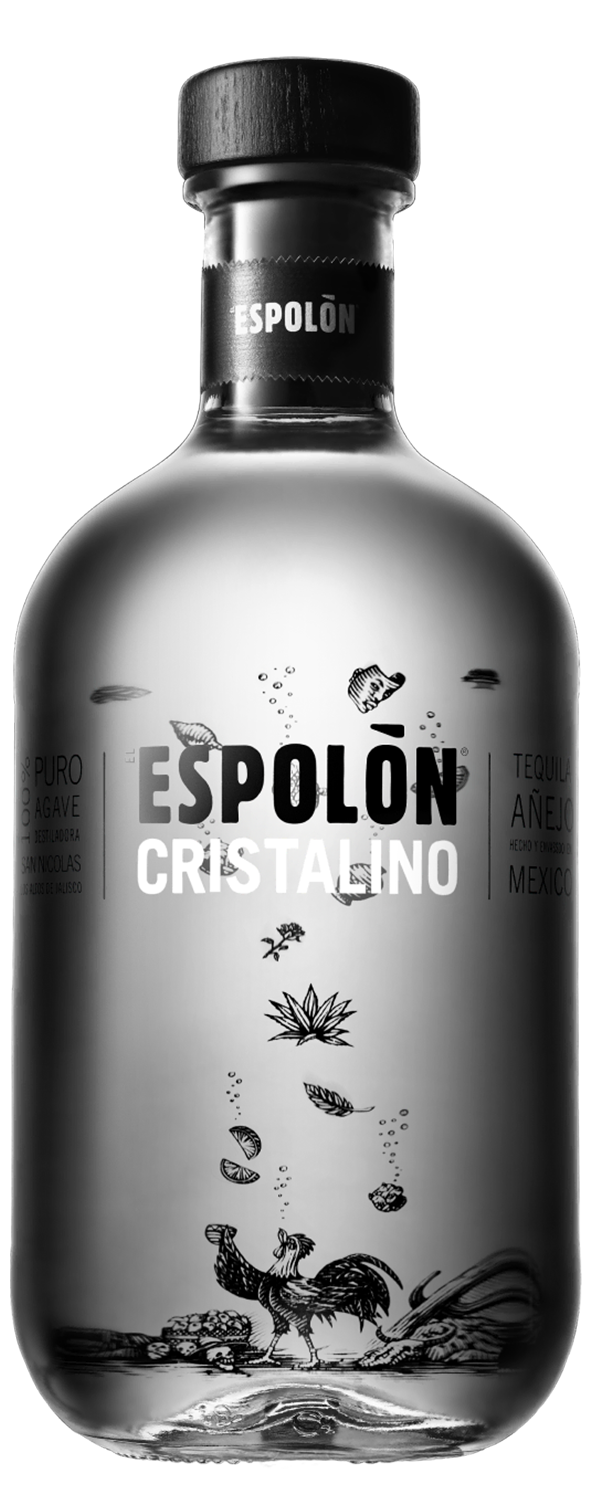
One of Maestro Cirilo’s final creations. Made from 100% Blue Weber agave and using water from the natural well that sits beneath our distillery, our Espolòn Cristalino is an authentic Tequila experience that can only be achieved with time. Its unique blend of Añejo with a touch of extra Añejo is artfully filtered with charcoal to obtain the translucent color while retaining our Tequila’s signature flavor.
A CRYSTAL CLEAR AÑEJO EXPERIENCE
Each drop of the silky, aromatic Cristalino begins with the rich notes of caramelized agave and honey followed by a fruity oaky finish. Espolòn Cristalino is exceptionally smooth and meant to be sipped and savored – for those with a perceptive palate. An unparalleled, authentic taste.
Espolòn Cristalino Tequila: A Crystal-Clear Añejo Experience
Pour Espolòn Cristalino for someone and watch them do a double-take. It looks like a blanco. It drinks like an añejo. That contradiction is the entire point.
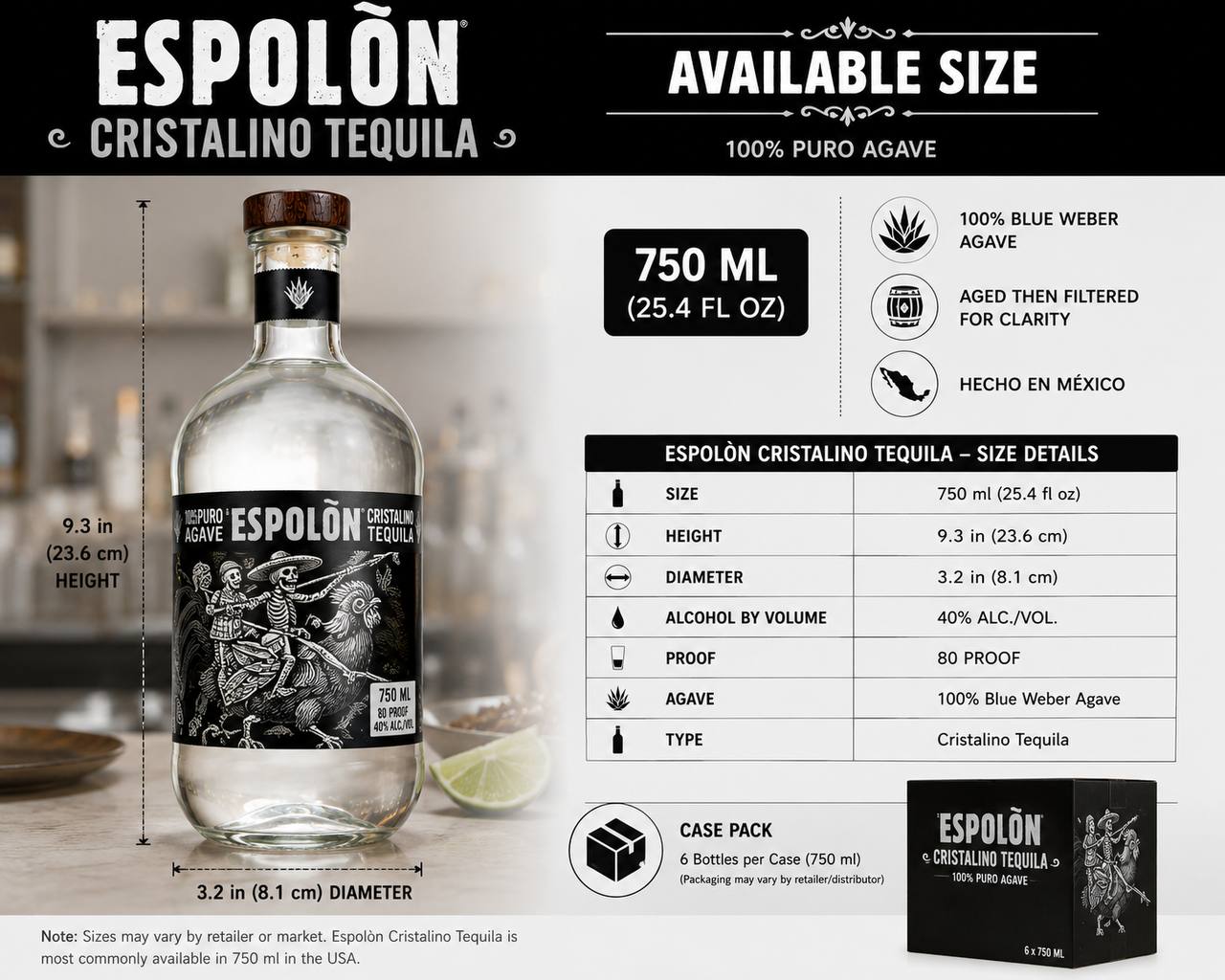
Underneath the clarity is a blend of añejo and extra añejo tequila, made from 100% blue Weber agave in the highlands of Jalisco, then minimally filtered through charcoal to strip the barrel’s color while leaving its flavor intact. Bottled at 40% ABV (80 proof).
Find Espolòn Cristalino near you →
Tasting Notes
Crystal clear in the glass — no color at all, which is precisely what makes the first sip land the way it does.
On the nose: caramelized agave and honey lead, silky and aromatic, with a soft fruit lift behind them.
On the palate: rich caramelized agave carries through into honeyed sweetness, rounded and full despite the water-clear appearance. The barrel is unmistakably present, just invisible.
The finish: fruity and oaky, long and exceptionally smooth — built to be sipped and savored rather than shot.
Serve it: neat, chilled, over a large cube, or in a highball where you want aged character without the color.
What Is Cristalino Tequila?
Cristalino isn’t an official category under Mexican tequila regulation — it’s a technique applied to an aged tequila, and it’s become the fastest-growing style in the premium agave world over the last decade.
The process is straightforward in principle and delicate in practice. You age tequila in oak, which gives you vanilla, caramel, and spice — and also gives you color. Then you pass the liquid through activated charcoal, which binds to the large color-carrying compounds and pulls them out.
The hard part is restraint. Filter aggressively and you get a clear spirit that has also lost most of what the barrel gave it — clean, characterless, expensive vodka with an agave accent. Espolòn’s approach is deliberately minimal filtration: just enough passes to remove the color, not enough to strip the palate.
That’s why the tasting notes still read like an añejo’s. The flavor survived the filter.
How Espolòn Cristalino Is Made
It starts with aged stock, not new spirit
This is a blend of añejo and extra añejo tequilas — meaning every drop in the bottle has spent at least a year in oak, and a portion of it three years or more.
That matters commercially as well as sensorially: extra añejo stock is scarce and slow to build, so a cristalino containing it represents real inventory commitment rather than a filtered reposado wearing a premium label.
The agave comes first
The base is 100% blue Weber agave grown in the red volcanic soil of Los Altos, Jalisco, where altitude and cool nights push the plant toward sweeter, fruitier sugars. Jimadores harvest each piña by hand with a coa de jima.
Espolòn’s cook is calibrated deliberately between two industry extremes — brick ovens push too much smoke into the spirit, industrial diffusers don’t caramelize the agave enough. The caramelized-agave note you taste in the Cristalino traces back to that decision, long before any barrel or filter.
The cenote beneath the distillery
The expression takes its inspiration from a natural well that sits below Espolòn’s distillery in Los Altos — the clarity of the water as the reference point for the clarity of the spirit.
See how Espolòn tequila is made →
Where Cristalino Fits in the Espolòn Range
| Blanco | Reposado | Añejo | Cristalino | |
|---|---|---|---|---|
| Color | Clear | Pale gold | Deep amber | Clear |
| Aging | None | American oak | Oak + bourbon barrel | Añejo + extra añejo blend |
| Flavor | Agave, citrus, pepper | Vanilla, caramel, oak | Cocoa, dried fruit, char | Caramelized agave, honey, fruity oak |
| Best for | Margaritas | Stirred drinks, versatile | Sipping neat | Sipping, chilled serves, gifting |
The Añejo and the Cristalino are both sippers, but they’re different experiences. The Añejo is darker in every sense — cocoa, char, dried fruit, a bourbon-barrel backbone. The Cristalino is lighter on its feet: honeyed, silkier, cleaner through the finish. If you like aged spirits but find heavy oak tiring, this is the one.
How to Drink Espolòn Cristalino
Neat, at room temperature
The default, and the one that shows the most. Use a glass that tapers at the top and give it a minute to open.
Chilled
Ten minutes in the freezer, or a short pour over one large cube. Cold tightens the honey note and makes the silkiness even more pronounced. This is the serve that wins over people who “don’t like tequila.”
Cristalino Highball
- 2 oz Espolòn Cristalino
- Sparkling mineral water to top
- Long lemon twist
Build in a tall chilled glass over clear ice. Aged complexity in a drink that still looks and drinks light — the cristalino category’s best trick.
Cristalino Old Fashioned
- 2 oz Espolòn Cristalino
- ¼ oz agave nectar
- 2 dashes Angostura bitters
Stir over a large cube, express an orange peel. A clear Old Fashioned is a genuine conversation piece, and the honeyed oak carries the drink properly.
A note on mixing: this is aged stock, and citrus-heavy cocktails will bury what you paid for. Keep it in stirred drinks, highballs, and neat pours. If you’re making margaritas, reach for the Blanco.
Browse all Espolòn cocktails →
Price, Proof, and Availability
Espolòn Cristalino is bottled at 40% ABV (80 proof) in the 750 ml format.
US retail typically runs in the high fifties to low sixties for 750 ml — reflecting the añejo and extra añejo stock in the blend, and positioned below most of the cristalino category. Pricing and availability vary by state, since US spirits distribution is state-regulated.
The bottle is also worth mentioning as a practical matter: the clear liquid behind Espolòn’s calavera artwork makes this the expression people buy as a gift, which shows up in fourth-quarter demand.
Check price and availability near you →
The Rooster and the Calaveras
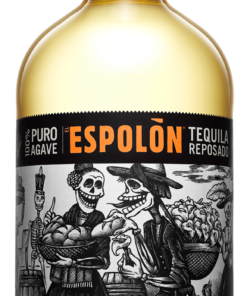
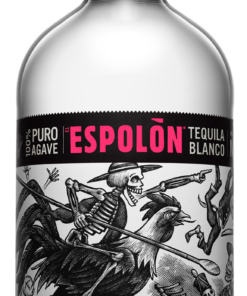
Espolòn means spur — the blade on a rooster’s leg, and a symbol of strength and Mexican national pride. The rooster is Ramón, and each label in the range catches him in a different scene.
The artwork descends from the calaveras of José Guadalupe Posada, the printmaker whose skeleton engravings turned Mexican popular art into a running record of the country’s real history. The bottle silhouette nods to the traditional Mexican milk bottle — an ordinary object made worth keeping.
Frequently Asked Questions
What is cristalino tequila? An aged tequila — añejo or extra añejo — that has been filtered to remove the color the barrel imparted, leaving a clear spirit with aged flavor. It’s a production technique, not a regulated category.
Is Espolòn Cristalino aged? Yes. It’s a blend of añejo and extra añejo tequilas, so every drop has spent a minimum of one year in oak, with older stock in the blend.
How is the color removed? Through minimal charcoal filtration — enough passes to take out the color, deliberately restrained to preserve the flavor.
What proof is Espolòn Cristalino? 40% alcohol by volume — 80 proof.
Is it 100% agave? Yes — 100% blue Weber agave from the highlands of Jalisco, Mexico.
Cristalino vs. blanco: what’s the difference? They look identical and taste nothing alike. Blanco is unaged, so it’s bright, peppery, and agave-forward. Cristalino is aged then filtered, so it’s rounded, honeyed, and oak-influenced.
Cristalino vs. añejo: which should I buy? Añejo if you want depth, char, and cocoa. Cristalino if you want the same aged character in a lighter, silkier, sweeter register.
Should I mix Espolòn Cristalino or sip it? Sip it, or use it in stirred drinks and highballs where the aged character is the point. Citrus-forward cocktails waste it.
Is it a good gift? It’s the most giftable bottle in the range — the clear spirit behind the calavera label reads as a premium tequila on sight.
Espolòn® Tequila Cristalino. 40% alc./vol. (80 Proof). Please enjoy responsibly.
| BOTTLES | 1 BOTTLE, 3 BOTTLES, 6 BOTTLES |
|---|
Be the first to review “Espolòn Cristalino”
Related products


ESPOLON TEQUILA

ESPOLON TEQUILA
ESPOLON TEQUILA


ESPOLON TEQUILA
Reviews
There are no reviews yet.