
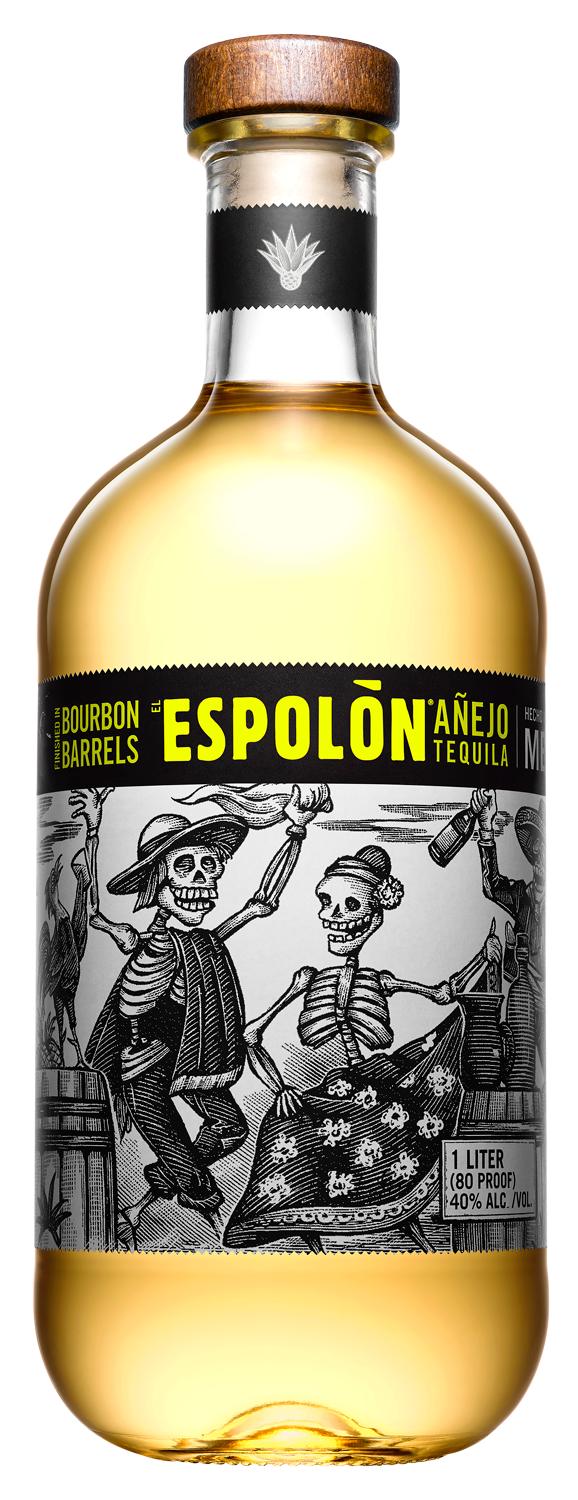


Espolon Anejo Tequila
Price range: $25.00 through $44.99
Our Tequila Añejo is aged 10 months in American oak barrels and finished for at least two months in bourbon barrels to create a Tequila rich in character with a taste of its own. This one deserves to be sipped, alone or with an ice cube.
DISARMINGLYELEGANT
With its bright reddish-gold hue and balanced profile, this Tequila will engage and amaze your palate. Its aroma balances roasted agave and earthy wood with a touch of butterscotch. With one sip, you’ll discover its medium-to-full body, and velvety mouthfeel that ties it all together. Take in notes of caramel, vanilla, dried fruit, and chocolate to deliver an Añejo experience like no other.
Espolòn Añejo Tequila: The One That Starts With the Finish
Most añejo tequilas tell you how long they sat in a barrel. Espolòn Añejo is more interesting than that, because the story isn’t the duration — it’s the second barrel.
Every bottle begins life as Espolòn Blanco: 100% blue Weber agave from the highlands of Jalisco. It then rests roughly ten months in new American oak, and here’s where it diverges from the category. Instead of simply continuing in the same wood, the tequila is moved into deeply charred bourbon whisky barrels for a final two months, where char and residual whiskey character rewrite the finish entirely.
Those barrels come from Wild Turkey — a sister distillery under the same ownership, which means Espolòn gets first-fill access to bourbon casks most tequila producers would have to bid for.
Tasting Notes
Pour it and it shows burnished amber — deeper than a reposado, but still clear of the syrupy darkness that usually signals added color.
On the nose: vanilla and caramel arrive first, layered over roasted agave, with the sweet charred-wood note that only comes from a heavily toasted bourbon cask.
On the palate: medium-to-full bodied and rounder than the Blanco by a wide margin. Cocoa, dried fruit, and toasted oak wrap around a still-recognizable agave core — the wood softens the spirit without erasing what it’s made from.
The finish: long, warm, and gently spiced, with the charred sweetness lingering after the agave fades.
Serve it: neat in a Glencairn or small tumbler, over one large cube, or stirred into an agave Old Fashioned.
Why the Bourbon Barrel Matters
Barrel finishing is common in whiskey and still relatively rare in tequila, and it changes the spirit in two specific ways worth understanding.
Char, not just wood. A deeply charred barrel has an active carbon layer on its inner surface. That layer strips harsher compounds while the caramelized sugars just beneath it release vanillin and toasted-sugar notes into the liquid. It’s the same mechanism that makes bourbon taste like bourbon — applied to an agave base.
Residual whiskey. A first-fill bourbon barrel holds a few liters of spirit soaked into the wood itself. That residue works back into the tequila during the finishing period, adding a layer of dried fruit and baking spice that American oak alone wouldn’t produce.
The short second maturation is deliberate. Long enough for the char to do real work; short enough that the tequila doesn’t turn into a whiskey impersonation.
See how Espolòn tequila is made →
Espolòn Añejo vs. Reposado: Which One Do You Want?
The single most common question about the range, answered plainly.
| Reposado | Añejo | |
|---|---|---|
| Aging | Months in American oak | ~10 months oak + 2 months charred bourbon barrel |
| Color | Pale gold | Deep amber |
| Flavor | Vanilla, caramel, toasted oak | Cocoa, dried fruit, char, roasted agave |
| Body | Medium | Medium to full |
| Best use | Spirit-forward cocktails, sipping | Sipping neat or on ice |
| Buy it if | You still want brightness | You want depth and warmth |
Buy the Reposado if it’s going into a drink. Buy the Añejo if it’s going into a glass by itself. If you’re switching over from bourbon or aged rum, start with the Añejo — the charred-barrel character gives you a familiar handhold.
How to Drink Espolòn Añejo
Neat
Room temperature, no ice, in a glass that narrows at the top so the aromatics collect. Give it two minutes in the glass before the first sip — añejo tequila opens up noticeably as it breathes.
On one large cube
A single big cube dilutes slowly and pulls the sweetness forward without watering the spirit down. This is the most forgiving way to serve it to someone who thinks they don’t like tequila.
Añejo Old Fashioned
- 2 oz Espolòn Añejo
- ¼ oz agave nectar
- 2 dashes Angostura bitters
Stir over a large cube until properly chilled, then express an orange peel over the surface and drop it in. The charred-barrel notes do the work bourbon normally does here, and the agave keeps it from going heavy.
Añejo Espresso Martini
- 1½ oz Espolòn Añejo
- 1 oz fresh espresso
- ½ oz coffee liqueur
- ¼ oz agave nectar
Shake hard, strain into a chilled coupe. The cocoa note in the Añejo and the roast in the espresso reinforce each other — this one surprises people.
Browse all Espolòn cocktails →
Bottle Size, Proof, and Price
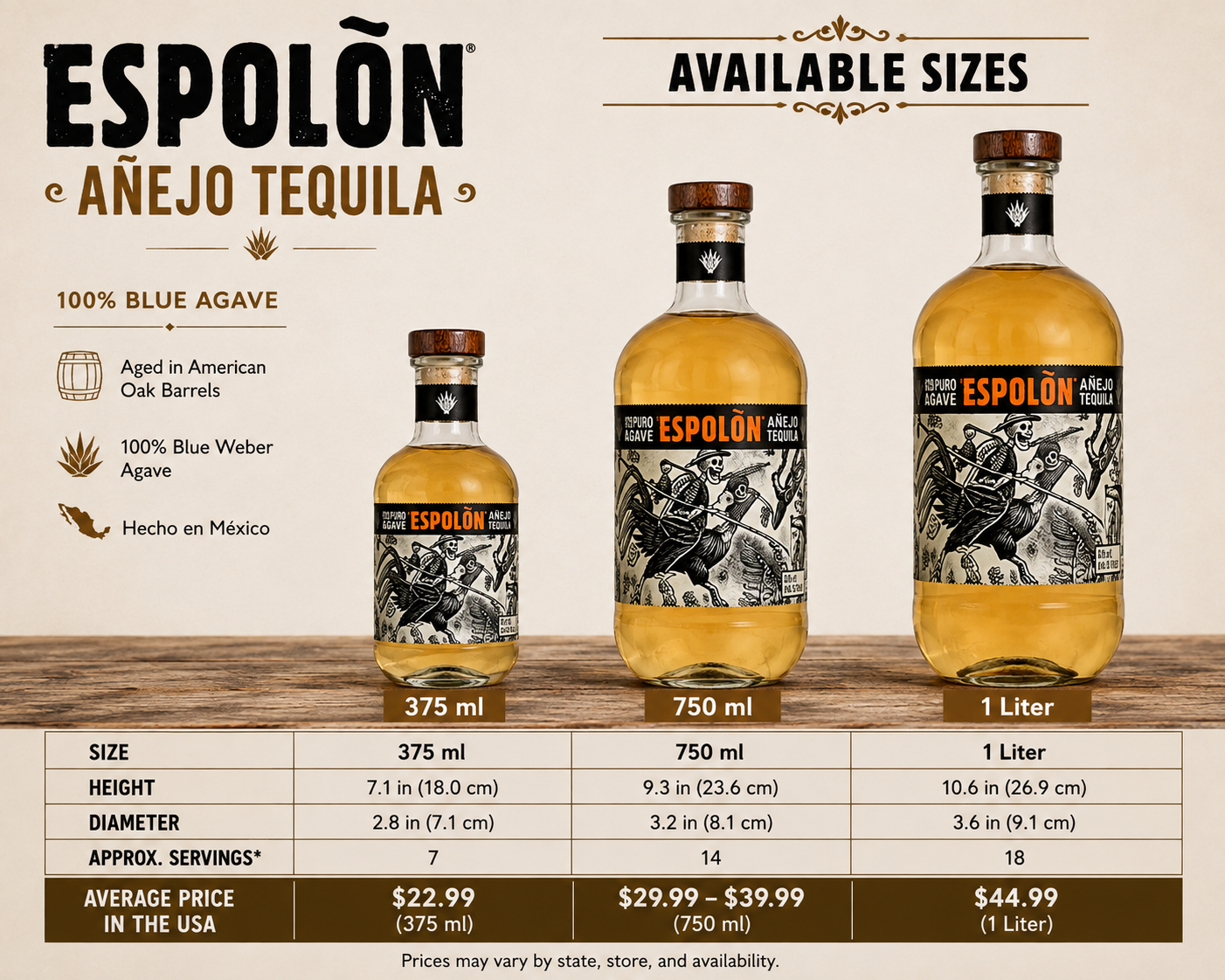
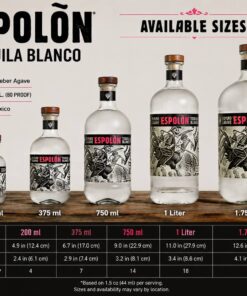
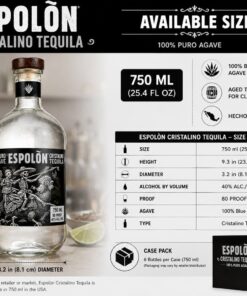
Espolòn Añejo is bottled at 40% ABV (80 proof), in line with the rest of the core range, and sold primarily in the 750 ml format.
It typically sits in the mid-thirties to mid-forties at US retail — unusually low for a barrel-finished añejo, and the main reason it appears so often on “best sipping tequila under $50” lists. Exact pricing varies by state, since US spirits distribution is state-regulated.
Check price and availability near you →
Going a step further: Extra Añejo
For drinkers who want more age, Espolòn released an Extra Añejo in the US in mid-2026 — extended American oak maturation finished in French Chardonnay casks, carrying notes of warm dried fruit and sweet spice, at around $79.99 for 750 ml.
The Rooster, the Skeletons, and Ramón
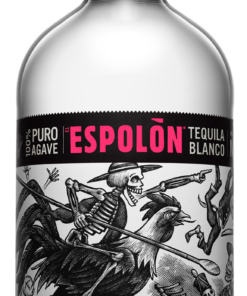
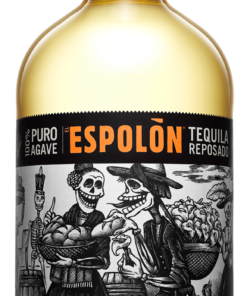
Espolòn means spur — the blade on a rooster’s leg. The rooster on the label is Ramón, and on the Añejo he’s caught mid-story alongside the calaveras that trace back to José Guadalupe Posada, the printmaker whose skeleton engravings turned Mexican popular art into a running commentary on the country’s real history.
Every expression in the range carries a different scene. The bottle silhouette echoes a traditional Mexican milk bottle — an everyday object made worth keeping.
Frequently Asked Questions
How long is Espolòn Añejo aged? At minimum 12 months — approximately ten months in new American oak, then a final two months in deeply charred bourbon barrels.
What barrels is Espolòn Añejo finished in? Charred Wild Turkey bourbon whiskey barrels.
Is Espolòn Añejo 100% agave? Yes — 100% blue Weber agave, grown and harvested in Jalisco, Mexico.
What proof is Espolòn Añejo? 40% alcohol by volume, or 80 proof.
Is Espolòn Añejo good for sipping? It’s the expression in the range built specifically for it. Neat or over a single large cube.
Can you make a margarita with Espolòn Añejo? You can, and it’s a richer, oakier drink — but the wood competes with the lime. Blanco is the better value and the better margarita.
What does añejo mean? “Aged.” Under Mexican regulation, añejo tequila must rest at least one year in oak barrels of 600 liters or less. Extra añejo requires a minimum of three years.
How should I store an open bottle? Upright, sealed, out of direct sunlight. Aged tequila is stable for years unopened; once opened, aim to finish it within a year before oxidation dulls the barrel notes.
Espolòn® Tequila Añejo. 40% alc./vol. (80 Proof). Please enjoy responsibly.
| SIZES | 375 ml, 750 ml, 1 litre |
|---|
Be the first to review “Espolon Anejo Tequila”
Related products
ESPOLON TEQUILA

ESPOLON TEQUILA


ESPOLON TEQUILA
ESPOLON TEQUILA
Reviews
There are no reviews yet.